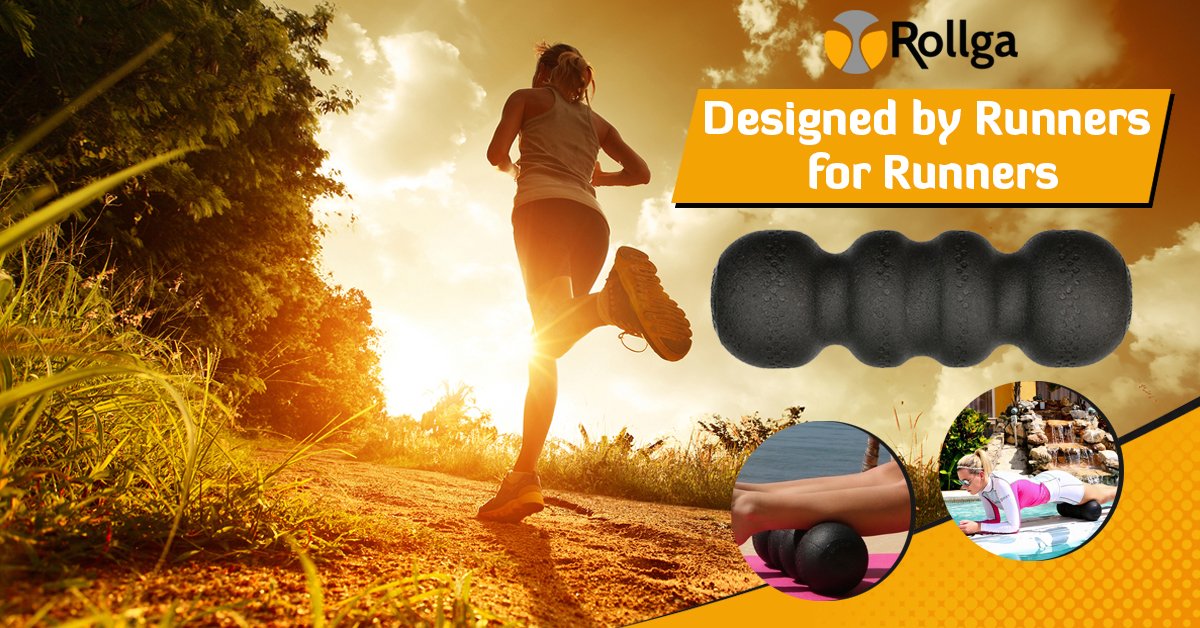
I have so many different kinds of foam rollers, massage sticks and balls for rolling that I could set up my own PT practice!They live all throughout my house in corners and closets and under beds, but I am always curious about new designs and whether there can ever be a better foam roller. A couple of weeks ago, I noticed an interesting and new version of a foam roller called the Rollga. I "had" to order one to give it a try and I do find it easier and more comfortable to use. It is like having massage balls mixed together with a roller. It does make it easier to target areas like a massage type ball does, without getting squirrely as it can be hard to maintain contact on the muscle you are trying to work on. I also notice that in the depressions of the roller, so much more muscle gets worked on. It feels really good on the quads and lower legs. I am not so sure on the back. I overdid it the first day using it, but that is probably more due to its effectiveness at hitting muscles and I loosened up some that were trying to hold my out-of -whack body together. There are three models: the silver Genesis which is a lower priced softer roller, the blue ISO model, and the black Pro-series model which has a harder surface. I got the Pro model. There are good discounts currently on the Rollga website, but they are cheaper on Amazon (plus you get a carrying strap-which costs an extra $1.95 on the website).
Here are three unique foam rolling techniques to enhance your running, recover faster and stay injury-free as presented by Fleet Feet Sports-Chicago. Don't get stuck just rolling back and forth on your foam roller (or use it as a pillow when you lie down on the floor to read or watch TV-my habit). The roller shown in the video is the Trigger Point Performance Grid but there other rollers could do some of these same tricks.
I have met all sorts of therapies in my quest to recover my stride. I have found out that a lot of my muscle type problems result from far deeper problems in hip/pelvis/si joint area and my own peculiar body: femoral anteversion, mild dysplasia, and tibial torsion (all strangely on the left side of my body). Because these problems throw my body into its own method or sorting out a running stride added together with years and years of running, I have dealt with all sorts of tight muscles due to the compensations my body created..
I became a interested in all sorts of foam rollers, massage balls, and other techniques to try to get my body back out of pain, tightness, imbalances and distortions. I have more rollers and other devices than many PT offices that I have been in. I think a few corners and closets in my house protect the huddled masses of all sorts of these implements and tools.
I had a few PT sessions with therapists who performed Graston or ASTYM therapy. The real basics are that they use speciallly made tools to scrape over your muscle tissue, tendons, or ligaments to address scar tissue and fascial restrictions. I have had it on my lower legs and feet as well as the hip area and back of the knee. The therapist rubs over the tissue. By the end of a treatment, you can be a bit sore and the tissue can be red and inflamed, but it does loosen things up quite effectively. One major reservation I have with these sessions is that it is usually limited to just one spot on your body. I would think that they would look over your whole body to find tightness and try to resolve them like a massage therapist would.
I often wondered if this was a treatment you could do at home (like foam rolling). Late last fall, I ordered a product called the Mobility Star to try it out. I would caution against doing anything close to attempting what a trained therapist does, but I was curious about working on my own muscles. The Mobility Star is similar in some ways to the professional tools, but I do think the corners and edge surfaces are much rounder and more gentler on your body tissues. When researching before trying this out, I also found this inexpensive Kindle book, An Introduction to Instrument Assisted Soft Tissue Mobilization, which gives some excellent guidelines and directions if you want to try self-treatments. It goes over what to do for various muscles and I would consider it a must-have book if you are so inclined to try this.
In fairness, I have not really gotten deep into this as I am in a do-no-harm phase of just trying to keep my body pain-free. I do keep the Mobility Star handy for when a muscle feels tight. I find it much easier to use than a roller or a massage ball on tight muscles around my legs (like a strong thumb), particularly around my shins. It can get directly into any tight tissue that bothers me and it gives much better leverage. When I am slightly bothered by something that is tight, I just pull it out, work on the muscle for a few minutes, and usually I feel much better. I haven't used it much as the book suggests as a way to do ASTYM, but when I have, I do it very lightly as the book suggests. It is not about how deep you can go. One interesting thing to note is that you learn to feel the vibration of you tissues as the tool helps you find what needs to be treated.
UPDATE: Taking a cue from my PT, I have been using theENDIGLOW Medical-Grade Stainless Steel IASTM Soft Tissue Mobilization Tool (MT004) to work on my larger muscles: quads, lower back, and glutes recently and I use it specifically for my tight adductors. I use it very lightly over the muscles particularly over spots where I can feel vibrations. It is a great tool. I also started using Freeup Massage Cream. It works great and there is no smell or greasiness when done. It allows for a smooth glide using my tools.
Here is an introduction to the Mobility Star:
This video shows some techniques for using the Mobility Star:
Here are some more tips and techniques:
Good luck, if you try doing this. I think that someday, these or similar tools will replace the foam rollers and massage type balls that have become very popular today.
Running cross-country for Wheaton College back in the fall of 1980.
Besides the wonderful fall weather and beautiful foliage, it is also cross-country and marathon season. This is absolutely the best time of year to be a runner. Unfortunately this fall, I do not feel like much of a runner at all. I got my new orthotics two weeks ago and at first they felt great. I thought I would get used to them slowly and on the second day did 4 miles. I felt real good and did 8 miles the next day feeling even better. I then thought, I might have a long shot at finishing the Baystate Marathon on Sunday, even with the limited training over the past month and 1/2. However, the next few days found my muscles getting stiffer and stiffer as I walked around in the orthotics trying to get my body to adapt to them. By race morning on Sunday, I found it hard to even walk comfortably to the starting line. I stood around waiting for the start and when the gun went off, I let my brain win this one over my will. I knew it was not going to be a good day to run and any running I did would not be helpful or fun at all. I ran for 3 minutes and 12 seconds and pulled out of the race. It has not been easy sitting around for over a month and a half and not running, but I have realized that my body cannot handle it in a healthy manner anymore. Everything is out of whack and running this way just reinforces all my imbalances. But thank goodness the medical establishment is to the rescue, I think! The last doctor wanted me to set up an appointment with a physiatrist. I tried to research as much as I could, but could not find a sports related physiatrist in the local area. I finally chose one nearby, based on the qualification that he looked young and my hope is he is up on the latest sport injury rehabilitations. Getting an appointment is another matter. You have to have your records sent over to his office. After figuring out how to do that, I have to sit and wait for them to call me. I did call Friday and they still don't have my records. I have the feeling this could take a long time. Update: I got an appointment and the earliest I can go in is Nov. 30. Nothing like moving through the medical system at a breakneck speed!
I do have ideas of what I want to try if the physiatrist does not work, unfortunately all ideas might cost some money and I have a kid in college, so I have to be quite sure about what I might do. Here are my ideas: Resistance Stretching: Because my left hip is still unstable and pinching tight even while even walking around and my left adductors are tight and almost painful when running, I feel I need someone who can move and manipulate muscles and joints around. Unless it is a labral tear, the muscles around my hip need a lot of loosening up. The loosest my muscles ever got was when I went to a resistance stretcher, a couple of years ago and I could do that again. One thing I might try is to go down to Boston and get worked on by the originator of resistance stretching and author of the book,The Genius of Flexibility: The Smart Way to Stretch and Strengthen Your Body, Bob Cooley (mega expensive) or one of the other trained stretchers at his clinic (expensive). This would help the tightness in my muscles, but I am not sure if it would retrain the patterns of movement that I have. My hope would be that it loosens my muscles and allows my orthotics to work with the idea that I could then more easily generate new patterns of movement without the restrictions I now seem to have. Rolfing: I thought when I went through the entire rolfing series a few years ago that all my problems would be solved. It was an interesting process, however it did not last long. I never felt better than after a rolfing session. I had twelve. My thinking is that the rolfing fell apart for me because my feet, because of the hallux functional limitus, kept collapsing and I reverted back to my poor movement patterns as compensation. Now that I have orthotics to correct the FHL, maybe a rolfing tune-up would help my body heal and strengthen. I met a Gate City Strider this summer who goes to a rolfer about an hour away who is also a physical therapist. I was hoping that at the last doctor's visit, I would be allowed to pursue going to this PT, but the doctor wants me to see a physiatrist instead. I also noticed that the rolfer that I went to in the past is now a trained resistance stretcher. However, interesting that sounds, she never really fixed me in the first place, so it may be good to go to someone new for a fresh set of eyes. For those that don't know, rolfing is not really massage. Massage is for your muscles, rolfing is for your fascia, the covering around all your muscles and connective tissue. The goal is to give your body "space" so that it can go back to alignment. Retrain My Muscles Another option is related to a book that I started reading this week called Muscular Retraining for Pain-Free Living. I really enjoy the reading as it gets technical about muscles and functioning of the body, but it is written in an easy to understand way. What I like is that it talks about a kinesthetic sense to the body and how it moves. No matter how much therapy and things I have tried, I firmly believe that my mind has its own movement map of how to move, and that what it thinks is correct is actually incorrect patterns. This book explains all this and then offers a series of exercises to reteach your body for proper movement patterns. They exercises are simple enough and they seem like a mix of Egoscue and Feldenkrais movements. The descriptions of the exercise, what they hope to achieve, and the author's notes on what you should feel are all clearly written. This is something that is missing from many books I have seen. I have started doing some of these exercises and a few of them pull and loosen my muscles in all the right ways. If I think these have an impact, I could make an appointment with the author, Craig Williamson. It would be a bit of a drive as he is in Portland, Maine, but I am at the point where I really need to find the right expert to fix things. Gait Analysis Recently Running Times has been putting out a series of videos called "Fixing Broken Runners." There are two videos (video one and video two) of the UVA Center for Endurance Training. I found that there is gait analysis being done at the Boston Running Center in Boston. This sounds really interesting, but I would be worried that it shows me what I already know about my stride. I am not sure of the therapy to fix things. I need more than to just be told what I need to fix. An Athletic Physical Therapist Finally, last night I discovered some excellent videos from a website called Athletes Treating Athletes. The website has informative videos which they call the The A-Tx-A Self Treatment System. Currently, there are 13 videos in the self-muscle masssage section. I have only had a chance to preview a few of them, but I like the teaching style, the descriptions, and the techniques that are illustrated. I have a house full of trigger-point tools like regular foam rollers, The Grid, and most recently the RumbleRoller, and all sorts of other things I have tried. I also have some DVDs put out by Trigger-Point, but these videos look like they are the most thought-out and descriptive videos to learn self-massage techniques. It also seems that the Physical Therapist. Leigh Boyle, who is putting this website and videos together works out of Plaistow, NH. That is less than an hour away. She is also an athlete and Ironman triathlete, so she would know the endurance athlete's body. I also like the fact that she is sharing her knowlege and doing an excellent job at it. Here is the video I spent time with last night and then tried out. It relieved a lot of tension in the front of my left lower leg. I am a slow learner at figuring out how to work with trigger points, although I have been trying for years. I really like this book, Trigger Point Therapy for Low Back Pain: A Self-treatment Workbook, and have been slowly reading it. I worked my calf and soleus trigger-points for a few night a couple weeks ago, and that worked real nice. I did overdue it because I could not find them again the night before the Baystate Marathon and I think that is some of why I felt a bit off. Maybe it was time to work on other muscles like these: Anterior + Lower Leg from Leigh Boyle on Vimeo. I will be spending time studying the rest of these videos and maybe I can get a referral to get some work done someday. So even though I no longer feel like a runner anymore, when the time is right, I have some new options to explore. Choosing the right option is going to be a tough decision. The good news is that I only have my running idiosyncricies to complain about. This blog's purpose is to share ideas as well as to track my progress and ideas for myself. It is a lot of fun, but I would guess that someone reading it might think that I complain about running injuries a lot and that there is not much else going on in my life. I feel extremely fortunate that all that I have to complain about is running. It's not really complaining, but I enjoy the curiousity of trying to solve this running problem and I don't intend to give up. Otherwise, life is great: family, friends, and work are all great and so I have the energy and desire to figure this out. I would like nothing more to again feel the enjoyment of running fast, loose, and free. Finally, I also have to look at the obvious. At the top of this page is a picture of me running cross-country in college. At the end of my senior year my right hip got really sore and I couldn't run without pain days before my final cross-country race. Almost too late, I figured out the problem. I carried my wallet in the right hip pocket of my jeans. This was causing the problem. I kept the wallet out but it was slow coming back to normal. I ended up being in last place in the midwest regional championships race at the one mile mark. At which point, my hip started relaxing. I turned it on and passed runners throughout the race and ended up with my fastest ever 5 mile race. The obvious thing is my sitting posture. I sit a lot and this is not good. My computer chair is a horrible chair and I end up slouching and not sitting straight nor do I balance properly. The obvious is to find a better way to sit and a better seat. Duh! I better start working on that, too!
I read a line like that in a book about paying attention to what your body is saying to you, so that small injuries do not turn into larger ones. Eleven days ago at the Gate City Striders track workout I felt a twinge in my soleus muscle that knocked me out of the workout. I took a day off and tried to run that Friday. I had to walk home the last two miles of an 8 miler as the muscle just tightened up. This is an injury that I have had 3 times previously in the past three years, so I wasn't happy.
I decided to be smart and not run. After a few days I could feel a marble-sized knot up in my calf (probably the source of the injury). I couldn't massage the thing away so I kept waiting. Last Monday I kickbiked down to Mines Falls to the the trail run series. I started warming up but after 100 yards of running I knew enough not to run. So I helped out directing traffic on the course; in the woods, with no bug spray on. After 50 minutes my legs were eaten alive.
I did a lot of biking last week but kept away from running until Saturday. I did 1 mile on the treadmill using my Vibram Five-finger shoes. I was up on my toes and felt no pain or stiffness. I went out then in my running shoes and did 4 miles, after one mile the soleus started tightening up a bit and I thought I would have to walk again, but I focused on my stride and made it home. Yesterday I only biked to keep things healing.
Tonight I decided to give it a go in the Mines Falls race series. This time I decided to take it easy and try something different. Instead of running the 5k course I ran the 5 miles course (a first for me). I actually enjoyed the course and didn't trip or run into a tree during the last difficult mile (my worry). I don't have the best balance! I also stayed on the course without getting lost. It was the relay race night, but I and a few others ran the whole race. I took it out easy and after a mile started passing a few people. At the relay exchange I got passed again by a fresh runner but soon got my position back. I hit the 3 mile mark at 19:00. I don't know how accurate it was. I picked up the pace just a bit, but then my heart started racing too much all of a sudden (I don't recall that ever happening before). It calmed down after about 20 seconds. I actually liked the variety of terrain and constant turning as opposed to the steady running at the same pace of the 5k course. The last mile was tricky and I slowed so as to keep on my feet and on the trail. It didn't feel as hard an effort as the 5k usually does as my speed was slower. I think I finished with a time of 33:44. The best thing was that my calf and soleus (although still not fully loose) did not bother me during the race. I believe I was very patient about letting it heal, even though it was very hard not to run, because I was itching to run all week. Hopefully tomorrow it will feel good enough to run again.
Foam Roller Tips
Yesterday I spent a good hour on the foam roller, something I haven't used too much this year at all. I was concentrating on doing the foam rolling properly and with purpose and used some new cues to help me gain more benefit from the foam roller.
Here is a video of how I used to use the foam roller on my hamstrings. This is how most people use the roller. It never really worked that well for me using this technique.
This is not the way I did it yesterday. I don't have a video, but here is a better way that I have learned. Sit on the foam roller with it up against your sacrum. Do one leg at a time so bend your other leg for balance and movement purposes. If you are rolling the right hamstring place your right arm straight behind you with your hand giving you balance on the ground. Your left hand does not have to be on the ground. Now, here is the important part. Sit up: head and chest lifted up. Move your hips back. Your hip is the hinge and as you press your hip back the roller will slide over your hamstring. Keep that leg straight and off the floor if you can. As your hip moves back your "straight" upper body will move forward, almost like what you would do when you bend forward to touch your toes. But, you are not bending forward, you are pushing your hips back. This will really feel good on the hamstring and gave me a far superior stretch and release. Don't forget to shift your hip so you are getting the hamstring on the side too! If you hit a painful spot stay on it until it does not hurt!
Here is a video of foam rolling the calf muscles. This is basic. What I do is put on ankle on top of the other and roll one leg at a time. Also point the toes and dorsiflex then also. Do the sides of the calf too, by pointing the toes to the side. If you don't get as much help as you would like, rather than use a foam roller use some PVC pipe that you can get from Home Depot. I cut up some 5" or 6" pipe and that gives you a very stiff roller!
I worked my calf muscles and soleus muscle, my quads and ITB band (mine is so thick and tight I can never get it to hurt- even if I put all my body weight on it). I worked my lower back and upper back also. Here is another trick I learned for the mid and upper back. As you roll over either side, you can get a deeper stretch and release by lifting up your hands to over your head. It works like this. If you are doing your mid back, first lift your hands up towards the ceiling. Then pull your wrists straight back with your arms remaining straight- don't bend the elbows. Next, pull your straight arms back towards your ears, like you are lifting your hands over your head. Don't twist the wrists to either side, keep the hands pointing back. This is not easy! Now roll with your arms in this position. As you do each side you can use your opposite hand to pull the fingers back on the side being stretched and rolled. You can go right over your shoulder blades to loosen them up doing this. This also gives a far superior stretch and release. I felt much looser today after all the foam rolling.



 to try it out. I would caution against doing anything close to attempting what a trained therapist does, but I was curious about working on my own muscles. The
  , which gives some excellent guidelines and directions if you want to try self-treatments. It goes over what to do for various muscles and I would consider it a must-have book if you are so inclined to try this.
 , the
, the  , as well as
  . You can also find more expensive (and probably more precise tools).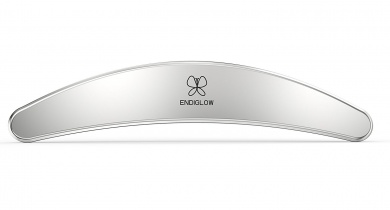

.jpg)
 , and most recently the